bteng
BTEng Architecture
Overview
BTEng is structured as a clean, layered engine where each concern lives in exactly one place.
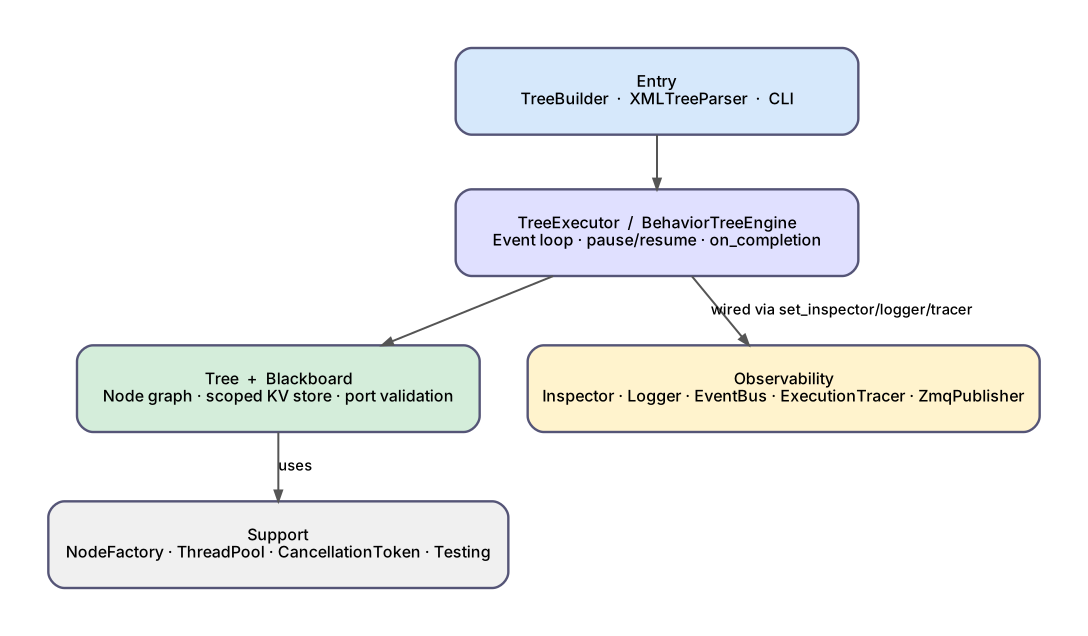
Module Map
| Package | Responsibility |
|---|---|
bteng.core.node |
TreeNode, NodeStatus, NodeConfig, NodeContract, port types |
bteng.core.tree |
Tree, TreeMetadata, TreeRegistry, hot-swap, modification queue |
bteng.core.executor |
TreeExecutor, ExecutorConfig, EventBus, BehaviorEvent |
bteng.core.engine |
BehaviorTreeEngine (legacy — kept for backward compatibility) |
bteng.core.tree_builder |
TreeBuilder — fluent Python builder API |
bteng.blackboard |
Blackboard — scoped, observable, provenance history |
bteng.factory |
NodeFactory singleton, @register_node, NodeManifest |
bteng.nodes.control |
Sequence, Fallback, Parallel, Reactive variants |
bteng.nodes.decorators |
Inverter, Retry, Timeout, RateController, Force* |
bteng.nodes.leaf |
ActionNode, ConditionNode, StatefulActionNode, AsyncActionNode |
bteng.concurrency |
ThreadPool (auto-injected), CancellationToken |
bteng.introspection |
Inspector, Logger, ZmqPublisher |
bteng.logging |
ExecutionTracer — per-tick frame recorder (replay / regression) |
bteng.xml_parser |
XML → live tree (extensible, zero parser changes for new types) |
bteng.plugins |
Dynamic plugin file / module loading |
bteng.testing |
MockActionNode, MockConditionNode, BehaviorTreeTest |
Execution Model
Tick chain
Each call to tick_once() follows this path through the stack:
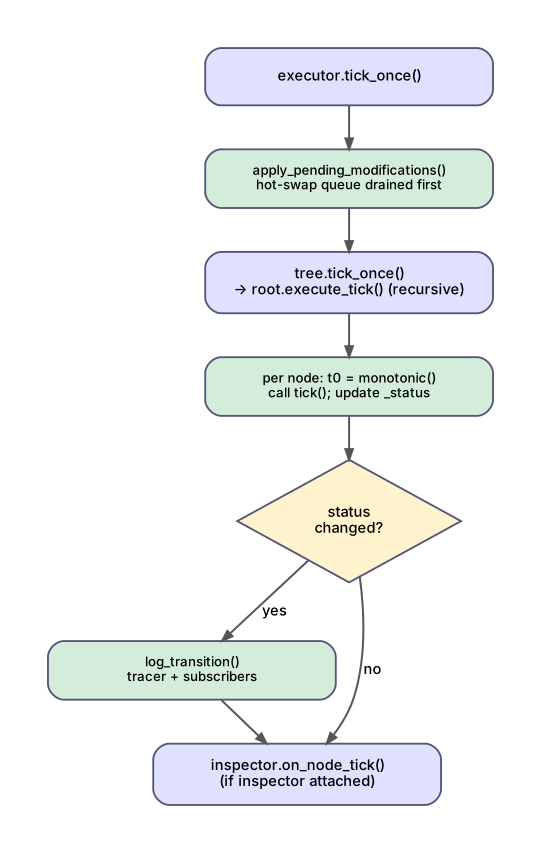
Key invariant: self._status inside tick() always reflects the previous tick’s
result. This is by design — StatefulActionNode, Retry, Timeout, and RateController
all use self._status != RUNNING to detect first-entry without extra flags.
Inspector ↔ Logger wiring
When both set_inspector() and set_logger() are called on an executor (in any order),
the logger is automatically subscribed to the inspector. Every NodeExecutionRecord
emitted by the inspector triggers a Logger.log_transition() call. No manual
subscription code is needed.
executor.set_inspector(inspector)
executor.set_logger(logger)    # auto-wired; order doesn't matter
ThreadPool auto-injection
TreeExecutor traverses the full node graph when set_tree() or set_thread_pool()
is called and injects the shared ThreadPool into every AsyncActionNode it finds.
Manual node.set_thread_pool(pool) calls are no longer required.
Tick Lifecycle
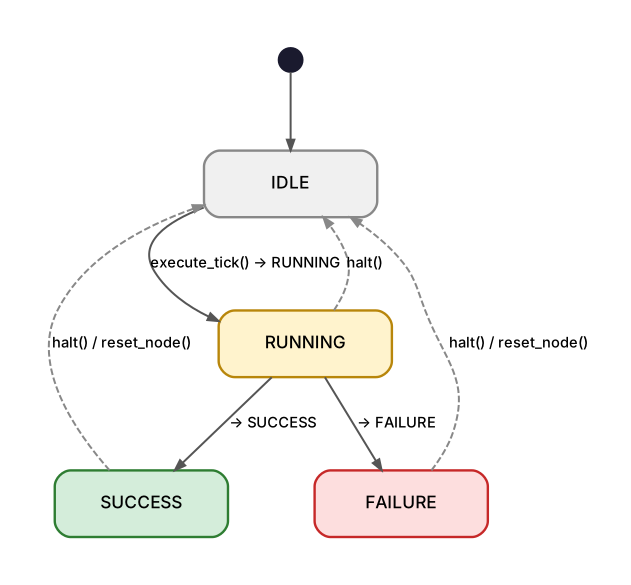
halt() is called by:
- Parent control node when a sibling fails or succeeds (frees RUNNING children)
TreeExecutorwhenhalt_tree()is called or the tree completes withhalt_on_completion=True- External code via
tree.halt_all()
_on_halt() is the internal cleanup hook. For TreeNode it is only called when
_status == RUNNING. ControlNode.halt() and DecoratorNode.halt() propagate halts
to their children directly.
Concurrency
| Mechanism | Use case |
|---|---|
AsyncActionNode + ThreadPool |
Non-blocking leaf nodes; pool auto-injected by executor |
CancellationToken |
Cooperative cancellation of async tasks |
ParallelNode |
Conceptual parallelism — ticks all children in the same thread |
Blackboard (threading.RLock) |
Safe cross-thread data sharing |
Inspector (threading.Lock) |
Thread-safe event collection |
ZmqPublisher background thread |
Decoupled event streaming; never blocks the tick loop |
Blackboard Scoping
Child scopes fall through to their parent for unknown keys. Subtrees get their own scope so internal keys don’t pollute the parent namespace.
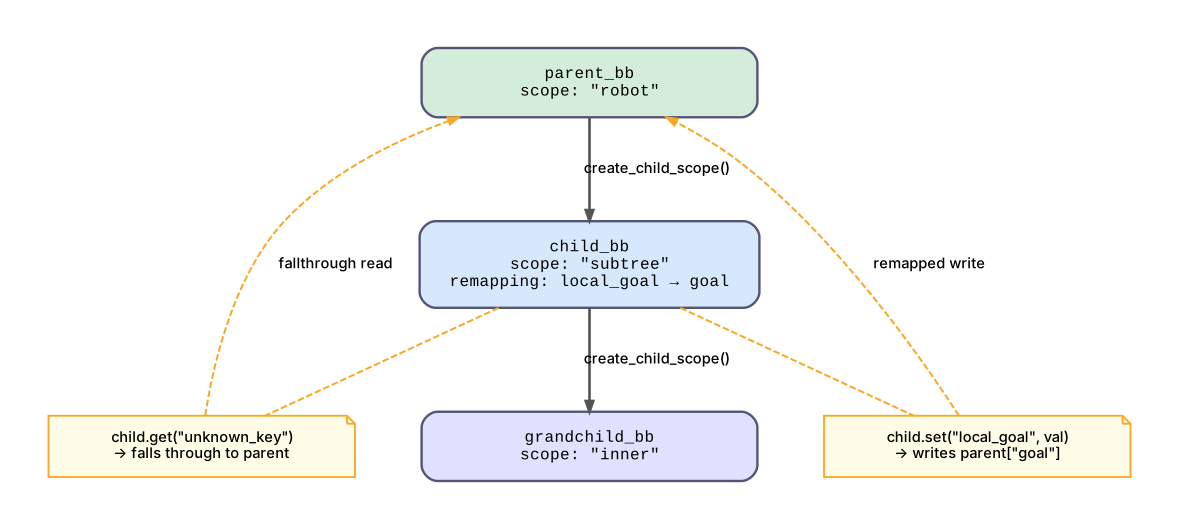
- Writes to a remapped key in a child scope are forwarded to the parent’s key.
- Reads fall through from child → parent if the key is not found locally.
Noneis a valid stored value —bb.has(key)returnsTrueandbb.get(key)returnsNone, not the default.
parent = Blackboard.create("robot")
child  = parent.create_child_scope("subtree", remapping={"local_goal": "goal"})

child.set("local_goal", (1.0, 2.0))   # writes parent["goal"]
child.get("local_goal")               # reads parent["goal"]
child.get("other_key")                # falls through to parent["other_key"]
Runtime Tree Modification
Structural changes (replace / insert / remove nodes) are queued and applied atomically between ticks — a running node is never interrupted mid-tick.
from bteng import TreeModification, ModificationType

tree.queue_modification(TreeModification(
    type=ModificationType.REPLACE_NODE,
    target_uid=old_node.uid,
    new_node=new_node,
))
# Applied at start of next executor tick
Tree.hot_swap_subtree() applies immediately and should only be called from the
executor thread (or while the executor is stopped).
ZMQ Event Stream
ZmqPublisher connects the Inspector to the outside world with zero coupling to any
specific GUI or monitoring stack.
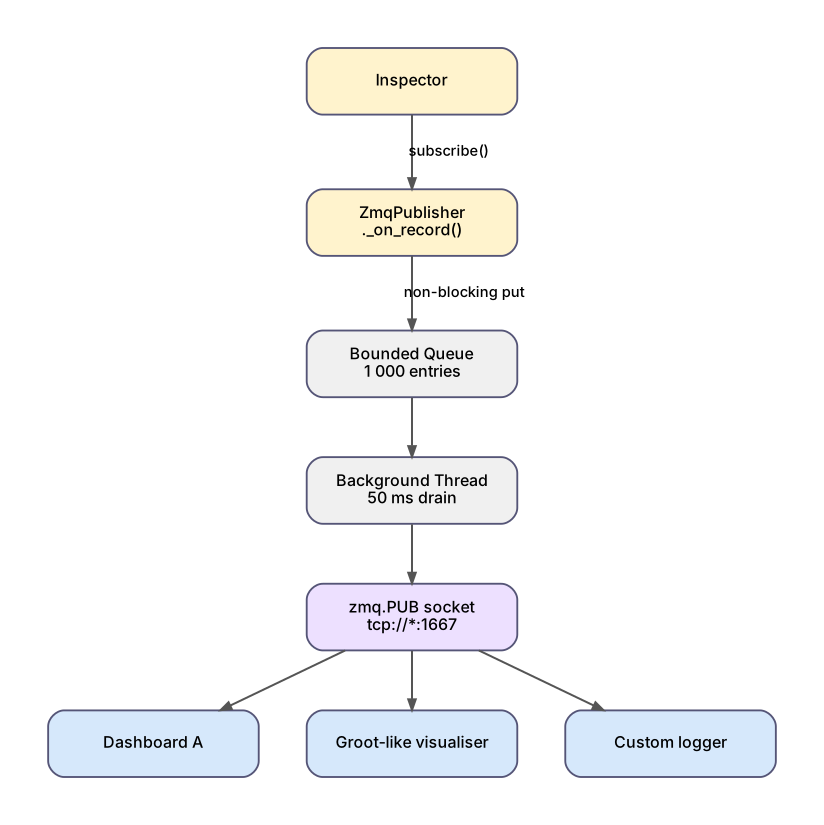
If the queue fills (1 000 entries), the oldest record is dropped. Real-time display; no backpressure.
Port Default Resolution Order
For any input port, value resolution follows this priority:
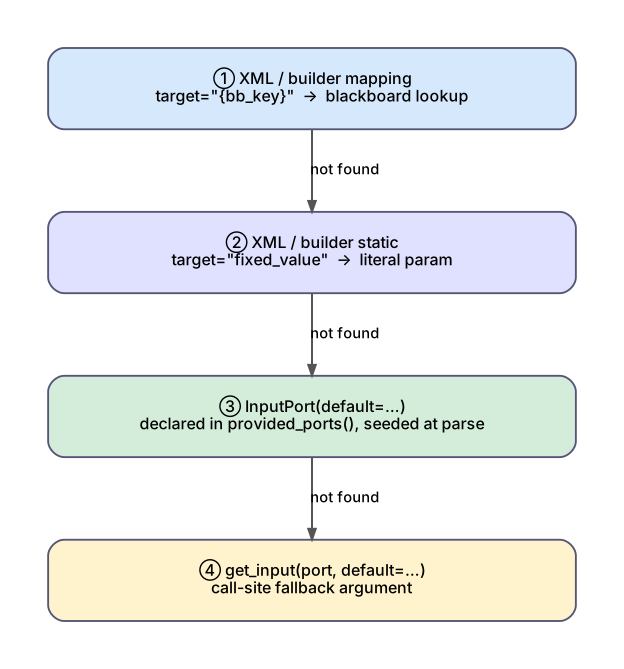
The XML parser seeds params from the InputPort manifest defaults before processing
XML attributes, so XML values always override but defaults apply when the attribute is
absent.